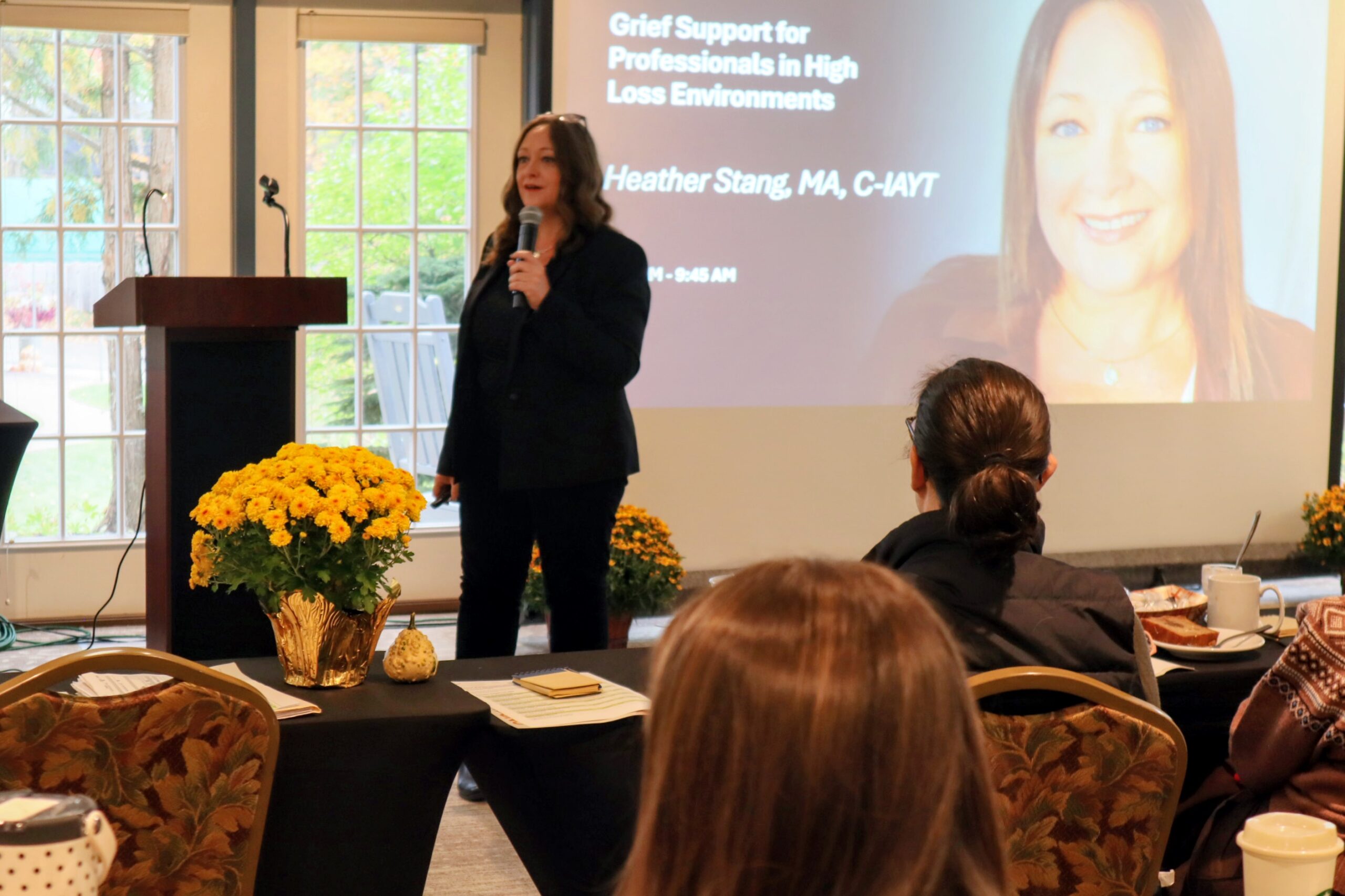
If you are looking for a grief speaker for a conference, bereavement event, professional training, retreat, or community program, the real question is not simply who can talk about grief.
You want a speaker who understands the nuances, knows how to connect with the people in the room, and gives them something useful to take with them.
The right fit depends on the room. A keynote for healthcare professionals may need current grief theory and practical application, while a bereavement event may call for reflection, connection, and practices people can use in their own lives. A retreat or workshop may need even more space for practice, discussion, and rest.
I have spent more than 20 years working with thousands of grieving people and the professionals who support them. That experience has taught me that a strong grief program starts with the people in the room, not with a canned talk about loss.
What a Good Grief Speaker Should Do
A good grief speaker should help people make sense of an experience that can feel disorienting. That may mean normalizing reactions people are worried about, educating them about how grief can affect the mind and body, and giving them language for things they have not been able to explain.
The presentation should also offer some hope without drifting into forced positivity. Grief does not need a silver lining. People may still benefit from hearing that grief and a meaningful life can exist together, and that there are things they can try when sleep is hard, concentration is poor, or emotions feel unpredictable.
Practical tips matter too. A useful grief program gives people something they can do, not just something to think about. That might be a short mindfulness practice, a journaling prompt, a way to respond to someone who is grieving, or a simple practice for a difficult moment.
And because grief can make concentration and memory harder, the learning should not depend on people remembering everything from the room. Follow-up emails, handouts, recordings, reflection prompts, or books attendees can return to later can help the material stay useful after the event.
If I were evaluating a grief speaker, I would look for someone who can do five things well: normalize, educate, inspire, offer practical tools, and make the learning easy to remember and revisit.
Personal and Professional Experience Both Matter
Grief is personal, but speaking about it well also takes training, context, and judgment. Someone may understand grief deeply because of their own loss, yet one person's experience cannot stand in for everyone else's.
Professional education helps a speaker understand the range of ways people grieve and avoid turning a personal story into a universal prescription. It also gives them a stronger foundation for explaining current grief theory, bereavement, mindfulness, trauma-sensitive practice, and the differences between support, education, and clinical care.
The reverse matters too. A speaker may know the research very well and still sound distant if the material never makes contact with real life. Grief does not stay neatly inside theories. It shows up in the grocery store, in a hospital hallway, in the middle of a workday, in a relationship, or when someone realizes they no longer recognize the life they are living.
The strongest grief speakers can work with both. They know the theory, but they also understand what grief can feel like from the inside.
My own work is shaped by both professional training and lived experience. I have more than 20 years of experience in grief, mindfulness, and bereavement, a master's degree in Thanatology, and years of teaching and speaking for public and professional audiences. I have also lived through significant losses of my own, which has changed the way I teach without becoming a template for anyone else's grief.
What Should You Look for in a Grief Speaker?
Credentials matter, especially when the audience includes clinicians, healthcare professionals, educators, hospice teams, attorneys, or others who need accurate information. They are only one part of the picture, though.
Pay attention to how the speaker talks about grief. Do they rely heavily on stages, closure, or the idea that people should eventually move on? Do they offer easy answers to experiences that are not easy, or do they leave room for complexity?
If you want to understand why I do not use the five stages as a roadmap for grief, you can read Enough With the Five Stages of Grief or my article 5 Stages of Grief: Are They Real?.
A good grief speaker should be able to explain difficult ideas clearly without making them simplistic. They should be comfortable saying that different people need different things and should be able to adapt their language and examples to the people in front of them.
Audience connection matters too. A speaker can know a subject inside and out and still lose the room. Look for someone who can hold attention while keeping the material human and useful.
Choose the Right Format
The format matters almost as much as the topic. A lecture, workshop, retreat, peer-support gathering, and professional training may all deal with grief, but they have different jobs.
Before choosing a speaker or program, think about what you want people to leave with. Do they primarily need information, a chance to practice, time to rest and reflect, connection with peers, or professional guidance they can apply in their work?
Keynotes and Lectures Help People Learn
Sometimes the most useful thing a grief speaker can offer is clear, accurate information.
A lecture or keynote can help people understand how grief affects the mind and body, why grief does not follow one predictable path, and why common myths can leave people feeling as though they are doing it wrong. For professional audiences, a strong lecture can also bring current grief theory into plain language and connect it to situations they already encounter in practice.
This format works especially well at conferences, continuing education events, professional meetings, and large community programs. People may not need to process their own grief in the room. They may simply need a clearer way to understand what they are seeing in themselves or others.
A good lecture should still feel human. The audience should leave with more than notes from a slide deck.
Workshops Give People Time to Practice
A workshop gives people more room to move from understanding an idea to actually trying it.
That might include mindfulness practice, journaling, reflection, discussion, case examples, role play, or embodied awareness. For professionals, workshops can provide time to think through real situations, notice habitual responses, and practice what it looks like to support someone without rushing to fix or advise.
Practice matters because information alone does not always change what happens in a difficult moment. Someone can understand grief intellectually and still feel overwhelmed when they cannot sleep, when an anniversary arrives, or when a client says something that leaves them unsure what to say.
Workshops can also give attendees a chance to ask questions they would never get to in a keynote. My 8-Step Mindfulness & Grief System is one example of a framework that can move from education into practical application without turning grief into a formula.
Retreats Create Space to Practice, Rest, and Reset
Retreats can offer something a lecture or workshop usually cannot: time.
When people are living with grief or doing emotionally demanding work, stepping away from ordinary routines can create room for reflection, rest, and practice. A retreat may include mindfulness, meditation, journaling, movement, quiet time, conversation, ritual, or opportunities to notice what has been pushed aside during a busy week or season.
For bereaved people, that can mean having time to be with grief without needing to perform progress. For professionals, it may mean stepping out of the role of helper long enough to notice what their own body and mind have been carrying.
A retreat does not need to be intense to be meaningful. Sometimes the value is simply having enough time for the material to settle.
Peer Support Offers Connection
Grief education is useful, but sometimes people most need to be with others who understand.
Peer support can reduce the pressure to explain or defend an experience. Hearing someone else describe something familiar can help people feel less alone and less strange in what they are going through.
That does not mean every group should become a place where people repeat painful stories week after week without learning anything new. Peer support can be stronger when connection is combined with structure, reflection, and practical ways to work with what is happening.
For some audiences, that sense of recognition may be one of the most valuable parts of the event.
Professional Support Helps People Apply the Work
People who support grieving clients, patients, families, employees, or communities may need more than another lecture.
Sometimes the real question is how to apply what they already know in a complicated situation. That may mean case consultation, mentoring, practice, role-specific training, or support thinking through boundaries, discernment, and the emotional impact of the work.
Experienced professionals usually do not need someone to tell them to care more. They may be looking for a clearer framework, better integration, practical tools, and help thinking through what to do when the usual approaches are not working.
My professional grief resources include training, practical tools, and resources for people who support grieving clients and communities. If the emotional weight of the work itself is the concern, I also have a collection of resources on self-care for grief professionals, including professional grief, boundaries, compassion fatigue, and sustainable practice.
Grief Speaking Should Be Useful in Real Life
People can learn a great deal about grief and still have no idea what to do at three in the morning when they cannot sleep. A professional may understand grief theory and still freeze when a client says something heartbreaking.
A family member may know they should be supportive and still reach for advice because silence feels uncomfortable. That gap between knowing and doing is where a grief presentation can be especially useful.
In my own speaking and teaching, I try to connect ideas to ordinary life. Research becomes more useful when someone can recognize it in their body, their workday, a family conversation, an anniversary, or the way their thoughts start looping when the house gets quiet.
Meditation, journaling, movement, reflection, and mindfulness can all be useful tools. None of them works for everyone, and none of them is a magic fix. The goal is to give people options they can try rather than another set of rules about how they should handle grief.
The Speaker Should Understand Your Audience
A grief presentation should fit the people who will hear it. That sounds obvious, but it is one of the first things I would ask about when hiring someone.
Who is attending, and what do they already know? Are they grieving personally, supporting grieving people professionally, working in healthcare, or attending a remembrance event?
Each group arrives with different needs. Experienced professionals may want methodology, practical tools, and real-world examples. A bereaved audience may be looking for language, connection, and something practical to try when the next difficult moment arrives.
The speaker should know the difference and plan accordingly.
Should a Grief Presentation Be Interactive?
Sometimes, but interaction should serve the audience rather than become a goal in itself.
A large conference keynote may work beautifully as a focused presentation with stories, teaching, and perhaps one short reflection. A smaller workshop may benefit from journaling, discussion, mindfulness practice, or time to apply what people are learning.
Professional training may call for case examples or conversation, while a retreat can allow more time for practice and quiet reflection. I would also be cautious about asking people to disclose personal grief in a large room simply because the topic is grief.
Participation can be meaningful without requiring people to share things they would rather keep private.
Ask What People Will Take With Them
Before booking a grief speaker, ask what the audience is likely to leave with.
That may be a clearer understanding of grief, better language for difficult conversations, a new way to respond to a client or family member, or a practice someone can try when they feel overwhelmed. The answer should be more specific than a list of topics on a slide.
Also ask what happens after the event. If the presentation includes ideas people may want to revisit, find out whether the speaker offers handouts, follow-up resources, recordings, or books that can continue the learning after everyone goes home.
A presentation does not need to solve everything to be worthwhile. It should give people something they can use.
Questions to Ask Before Booking
A short conversation with a prospective speaker can tell you a lot. Ask about the audiences they usually work with, how they approach grief, and how much they tailor their programs.
Useful questions include whether they have experience with an audience like yours, what participants are likely to learn, whether they offer keynotes as well as workshops or retreats, and how interactive the program can be. You may also want to ask about continuing education, virtual options, books, follow-up resources, and what they need from you to make the program fit the event.
The answers should make your decision easier rather than give you more work to do.
The Right Grief Speaker Knows the Subject and the Room
Grief is a serious subject, but a grief presentation does not need to feel heavy from beginning to end. There can be warmth, humor, reflection, curiosity, and moments of relief alongside difficult material.
People can talk about hard things and still leave feeling more connected and better equipped for what comes next. After more than 20 years of doing this work, that is still one of the things I value most about speaking.
A good grief speaker understands the subject and the room. Both matter.
Looking for a Grief Speaker?
I speak for conferences, professional associations, healthcare and hospice organizations, bereavement programs, retreats, continuing education events, and other groups that want a thoughtful, practical conversation about grief, mindfulness, and the work of being human.
My programs combine contemporary grief theory, mindfulness, professional experience, lived experience, and practices people can use in real life. Keynotes, workshops, retreats, professional training, and books can also be combined so attendees have something useful to return to after the event.
Explore my grief keynotes, mindfulness talks, workshops, retreats, and professional training →
About Heather Stang
Heather Stang, MA, is an award-winning thanatologist, author, mindfulness teacher, and speaker with more than 20 years of experience in grief, loss, and mindfulness. She has helped thousands of grieving people and trained professionals who support people living with loss.
Heather is the author of Living with Grief, From Grief to Peace, and Navigating Loss. She received the Association for Death Education and Counseling's 2025 Clinical Practice Award and has presented keynotes, workshops, retreats, webinars, and professional education programs for national organizations and community audiences.