The Mindfulness & Grief System
A clinically-informed, 8-step framework to navigate loss, regulate your nervous system, and honor continuing bonds.

What is the Mindfulness & Grief System?
The Mindfulness & Grief System is an 8-step, mindfulness-based framework that helps people navigate grief with greater awareness, compassion, and steadiness.
It brings together mindfulness, meditation, yoga philosophy, structured journaling, and grief theory from thanatology, the study of death, dying, and bereavement. Informed by modern grief theory and the principles of trauma-sensitive mindfulness, this system is designed to respect each person’s unique nervous system.
The system is inspired by Buddhist mindfulness and Hindu yoga traditions, and informed by modern grief theory, including Worden’s Four Tasks of Mourning, Neimeyer’s Meaning Reconstruction, Stroebe and Schut’s Dual Process Model, Klass’s Continuing Bonds, Doka’s Disenfranchised Grief, and Martin and Doka’s Grieving Styles.
It also follows principles of trauma-sensitive mindfulness, so the practices can be offered with care, choice, and respect for each person’s nervous system.
Today, the Mindfulness & Grief System is used by grieving individuals, grief coaches, therapists, chaplains, yoga therapists, and bereavement professionals around the world.
Why mindfulness for grief?
Grief is not only emotional. It affects the body, the nervous system, attention, sleep, identity, relationships, and the ability to feel present in daily life. Mindfulness does not take grief away. What it can do is help people stay with their experience without becoming completely overwhelmed by it.
Over time, these practices can help people:
- feel more grounded in the body
- navigate grief waves with greater steadiness
- soften anxiety and nervous system overload
- reconnect with meaning and inner wisdom
- stay connected to the person they love while continuing to live fully
This is not about “getting over” grief or forcing positivity.
It is about learning how to live alongside loss with greater awareness, compassion, and support.

How the system developed
The Mindfulness & Grief System didn’t begin as a framework. It began with people.
Around 2009, while I was earning my Master’s in Thanatology at Hood College*, working as a Phoenix Rising Yoga Therapist, and volunteering on the National Suicide Lifeline, I began leading small Yoga for Grief groups.
In one of my thanatology classes, Dr. Terri Martin led a discussion about self-care and grief as a stress response. Something clicked for me immediately. I remember writing “Yoga for Grief!” in my spiral notebook and circling it over and over again.
At the time, I was already seeing how grief lived in the body through my one-to-one yoga therapy sessions. Grief was not only emotional. It showed up through breath, tension, anxiety, exhaustion, disconnection, and nervous system overwhelm.
I want to be clear that I did not invent mindfulness, yoga, or journaling for grief. Buddhist mindfulness and Hindu yoga traditions have long offered practices for working with suffering, including the suffering that comes with loss.
What I did do was intentionally map principles from thanatology onto these practices in a structured and accessible way.
The groups combined meditation, body awareness, gentle movement, journaling, and self-inquiry with grief theory and compassionate support.
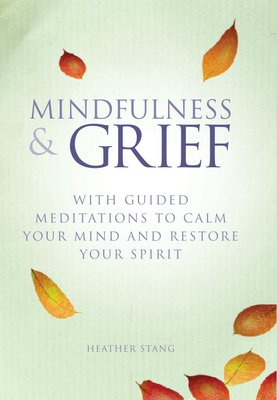
A few years later, something unexpected happened. A publisher, CICO Books, found my blog and reached out, asking me to write a book on mindfulness and grief.
I said yes, but I didn’t want to write something theoretical. I wanted it to reflect what actually helps people.
So in 2013, I reconnected with many of the original participants from those early groups. They met with me in coffee shops, in my office, and over the phone. Some even brought journals they were still writing in four years later.
They revisited their grief, shared what stayed with them, and told me honestly what helped and what didn’t.
What emerged again and again was this: the practices that lasted were the ones that helped people feel safer in their bodies, stay present with difficult emotions, and remain connected to the people they loved.
Those conversations became the foundation of the Mindfulness & Grief System.
That work became my first book, originally published as Mindfulness & Grief (2014). Now in its third edition as Living With Grief (2024), it reflects what has grown into the Mindfulness & Grief System.
Presenting the Mindfulness & Grief System to the Field
In 2014, I presented this work at the Association for Death Education and Counseling (ADEC). Sharing the emerging system with other grief professionals helped me see that this approach resonated beyond my own groups.
It was met with strong interest and encouragement, which affirmed what I had been seeing in practice: mindfulness, yoga therapy, journaling, and thanatology could work together in a structured, compassionate way to support people living with loss.
The Mindfulness & Grief System is featured in The Handbook of Grief Therapies and is used by professionals in hospice, healthcare, counseling, education, yoga therapy, chaplaincy, and community grief support settings.
More than a decade later, in 2025, I received ADEC’s Clinical Practice Award for innovation in grief support, honoring my contributions to evidence-informed, compassionate grief care and the development of the Mindfulness & Grief System.
*Hood only offers a certificate now
The 8 steps of the Mindfulness & Grief System
The Mindfulness & Grief System developed over years of working with grieving people in yoga therapy groups, grief support settings, and professional training programs.
These steps are not meant to force grief into stages or timelines. They are gentle practices people can return to again and again as grief changes over time.
Each step supports a different part of the grieving experience, helping people move between awareness, regulation, reflection, meaning-making, and connection.
While the steps build on one another, grief is not linear. People often move back and forth between them over time.
1. Conscious Relaxation
Grief keeps the body in a state of tension and vigilance. This first step helps calm the nervous system and create a greater sense of safety in the body.
In my book, Living With Grief (Formerly Mindfulness & Grief), the publisher asked that mindful awareness come first. In practice, I continue to teach conscious relaxation as the foundation.
2. Mindful Awareness
This step develops the ability to notice thoughts, emotions, sensations, and grief reactions without immediately becoming overwhelmed by them.
3. Compassion for All
Many grieving people carry guilt, anger, regret, shame, or self-judgment. Self-compassion practices help soften the harsh inner voice that often appears after loss.
4. Skillful Courage
This is the practice of turning toward grief, gently and at your own pace, instead of avoiding it. Courage does not mean forcing yourself to face everything at once. It means learning how to be present with what is true.
5. Getting Unstuck
Grief can lead to patterns of rumination, avoidance, or emotional looping. This step helps people recognize those patterns and begin to shift them.
6. Continuing Bonds
Connection does not end when someone dies. This step explores how to maintain a meaningful, ongoing relationship with the person who died.
This step is also being adapted for non-death loss, estrangement, and complicated relationships, where connection may be painful, unresolved, absent, or changed in a different way.
7. Allowing Transformation
Grief changes us. This step supports integrating that change rather than resisting it or trying to return to who we were before.
8. Perpetual Resilience
Resilience is not something we arrive at. It is something we practice over time through awareness, compassion, connection, and care.
How the work has evolved
The system has continued to grow. In 2020, in response to the pandemic, I was invited to write From Grief to Peace, a guided journaling companion that follows the same 8-step structure.
Later, I wrote Navigating Loss, which focuses on non-death and disenfranchised grief. While it does not follow the same structure, the Mindfulness & Grief System still applies, with adaptations, especially in Continuing Bonds. This is where the work continues to evolve.
What I created, and what I didn’t
I want to be clear about something. I did not invent yoga, meditation, or journaling for grief.
These practices come from traditions much older than I am. Hindu yoga philosophy and Buddhist mindfulness teachings were developed, in part, to help human beings understand suffering, impermanence, attachment, and loss.
What I did was something different. I mapped these contemplative practices to principles from thanatology.
I began to see how meditation, movement, breathwork, journaling, and self-inquiry could support the core processes of grieving, including Worden’s Tasks of Mourning and Robert Neimeyer’s work on meaning reconstruction.
Over time, patterns emerged. That mapping became the foundation of the Mindfulness & Grief System.
Ways to work with the Mindfulness & Grief System
There are several ways to experience the Mindfulness & Grief System.
If you are grieving
Mindfulness can be a powerful support during grief, but many people find it difficult to practice consistently while moving through loss alone. Grief can affect concentration, sleep, emotional regulation, and the nervous system, making even simple practices feel harder than they once did.
Inside Awaken, my live online grief support group, we practice mindfulness together through guided meditations, journaling prompts, live support sessions, and compassionate community. Wednesday gatherings are specifically dedicated to meditation and guided journaling practices designed to help you gently work with grief at your own pace.
- Awaken Grief Support Group
- private grief coaching
- relationship loss coaching
- books, journaling, and guided practices
If you support grieving people
Therapists, counselors, chaplains, funeral professionals, and grief coaches use this framework to guide others in a structured and compassionate way. Professionals can learn the system through:
- the Mindfulness & Grief Coach Certification
- workshops and trainings
- organizational speaking and consultation
About Heather Stang
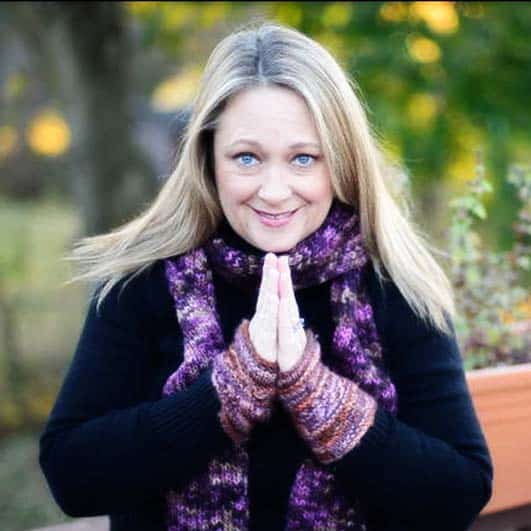
Heather Stang is a thanatologist, author, and yoga therapist specializing in bereavement support. Her work integrates contemplative practice with thanatology to support both individuals and professionals navigating loss. She is the creator of the Mindfulness & Grief System and has supported thousands of people worldwide through direct service and as a grief speaker.