Professional development with Heather Stang, MA, C-IAYT

Grief Literacy Training & Continuing Education for Professionals

Grief is a heavy topic.
Learning about it doesn't have to be.

Give your team an opportunity to explore grief in a way that's engaging, meaningful, and relevant to their work. Together, we'll build the skills to support others through loss and care for ourselves along the way.

I create customized training for healthcare and hospice teams, legal professionals, associations, and workplace leaders. And I make the planning easy for you.

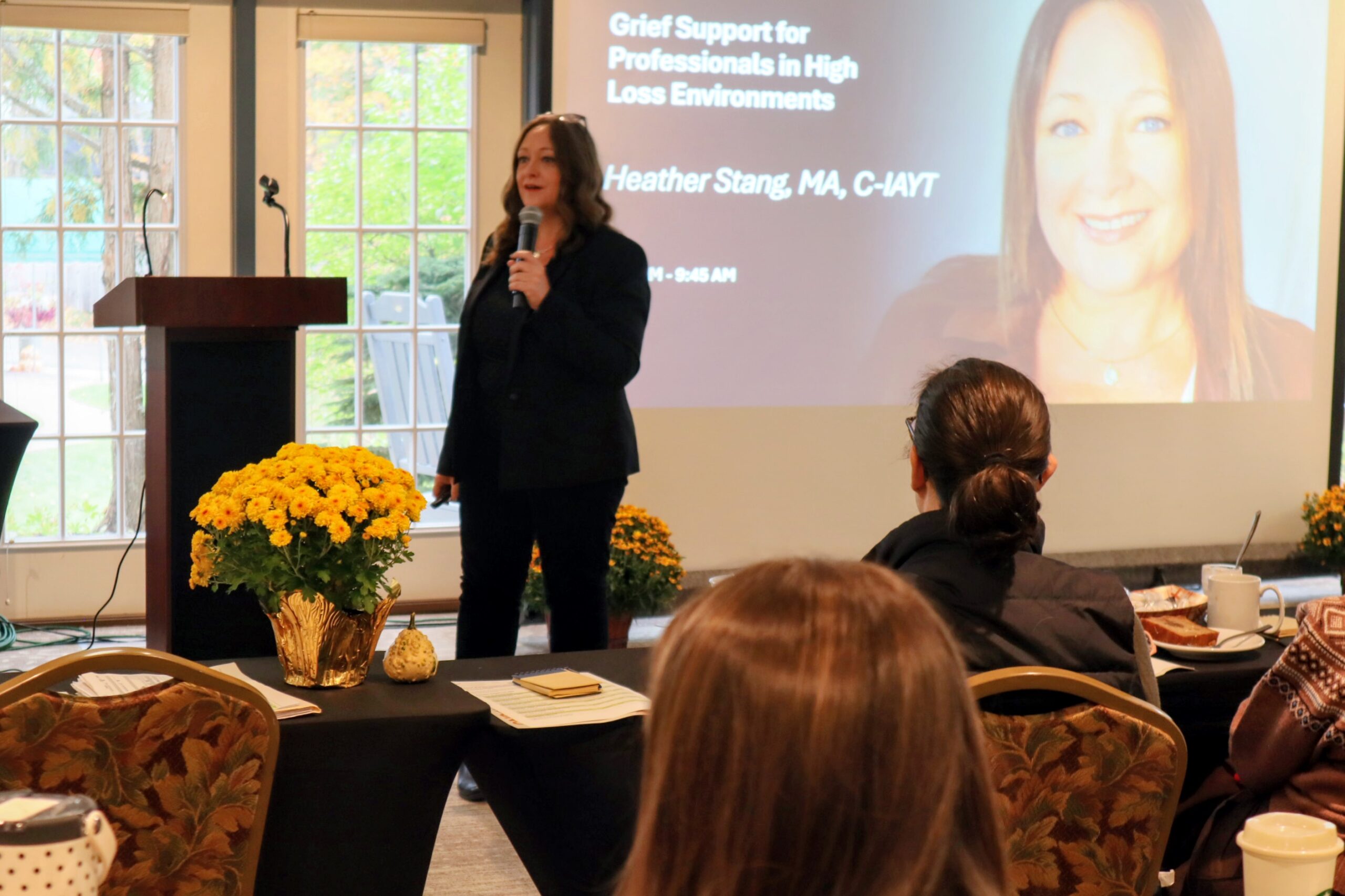
Heather Stang at an Oncology Nursing Society speaking engagement
Bringing grief education to professional audiences.
MA in ThanatologyCertified Yoga Therapist (C-IAYT)2025 ADEC Clinical Practice Award20+ years of experienceAuthor & educator
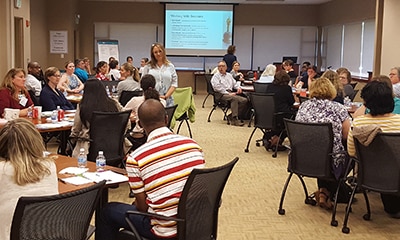
Heather Stang at a Maryland Hospital Association speaking engagement

What it feels like to learn together

More than another slide deck.

Picture a room of colleagues leaning in as we explore why grief shows up in some surprising ways. Someone recognizes a familiar situation. Another person discovers a more helpful way to respond to a patient, client, or coworker.

We'll make room for questions, reflection, real-world examples, and even a little laughter when it comes naturally. My goal is for participants to leave with ideas they can actually use the next time someone needs their support.

Grief literacy is about understanding how loss affects us, knowing what to say and do, and recognizing when someone needs more support. Your people don't need to become grief specialists to make a meaningful difference.

“Heather is warm, compassionate, and engaging.”
Kayla Smith, LMSW
Donor Family Services Coordinator, LiveOnNY
“It was a delight to work with Heather.”
Teresa L. Dutko, M.A., FT
Instructor, Cincinnati College of Mortuary Science

Three ways we can make a difference

What would help your people most?

Understanding what grief really looks like

Explore anticipatory grief, non-death loss, ambiguous loss, disenfranchised grief, and cumulative grief. Learn how loss can influence attention, memory, emotions, identity, relationships, and physical well-being.

Finding the words when it matters

Develop language and listening skills for conversations with grieving patients, families, clients, colleagues, and employees. Practice responding to emotional overwhelm, maintaining boundaries, and making appropriate referrals.

Caring for yourself while caring for others

Recognize the effects of repeated exposure to suffering and loss. Explore mindfulness, body awareness, relaxation, reflective practices, and self-compassion as resources for sustainable professional care.

Education relevant to your work

Let's talk about the work your people do.

Every audience brings a different set of experiences and questions. I'll meet your team where they are and connect the learning to the work they do every day.

Hospice and palliative care

Your team supports people through illness, death, and bereavement while experiencing losses of its own. Training can address both patient and family support and the emotional demands of interdisciplinary care.

  • Anticipatory grief and bereavement
  • Supporting patients, families, and caregivers
  • Mindfulness-based bereavement support
  • Professional grief, cumulative loss, and compassion fatigue
  • Grief-informed communication

Nurses, physicians, and healthcare teams

Loss occurs throughout the patient experience, not only at the end of life. Help your team recognize grief during diagnosis, treatment, changes in function, and difficult care decisions.

  • Recognizing grief across the patient journey
  • Communicating with patients and families
  • Supporting people through life-changing diagnoses
  • Professional grief following patient deaths
  • Mindfulness and compassionate boundaries

Attorneys, legal professionals, and bar associations

Grief can affect a client's ability to absorb information and navigate complex decisions. Training helps legal teams respond to emotional distress while remaining within their professional role.

  • Grief literacy for lawyers and support staff
  • Client communication and decision-making
  • Death, divorce, estate administration, and other losses
  • Responding to emotional overwhelm
  • Professional boundaries and attorney well-being
Read: Why grief literacy belongs in legal practice

Organizational leaders, HR, and management teams

Managers often want to support grieving employees but are unsure what to say or how to respond. Build practical skills for navigating loss while respecting individual needs and workplace responsibilities.

  • Grief-informed leadership
  • Supporting employees after loss and upon returning to work
  • Communicating about grief at work
  • Non-death loss and organizational transitions
  • Cumulative stress and thoughtful workplace support practices

Workshop inspiration

A few ideas to get us started

You don't need to arrive with a fully formed training plan. Pick a topic that sparks your interest, mix and match, or tell me what your team is struggling with. We'll shape the learning objectives together.

Grief 101: When Loss Is in the Room

For professionals across disciplines who encounter loss in their work. Build a foundation for recognizing grief and choosing an appropriate response.

Explore sample learning objectives
  • Distinguish between three forms of grief.
  • Identify ways grief may affect communication and cognition.
  • Apply a grief-informed response to a case example.

Grief-Informed Communication

For teams who navigate difficult conversations with patients, clients, or employees. Practice acknowledging grief while communicating information clearly and respecting professional boundaries.

Explore sample learning objectives
  • Demonstrate a compassionate listening response.
  • Revise a common unhelpful phrase.
  • Identify when a referral may be appropriate.

The Cost of Caring: Professional Grief and Compassion Fatigue

For professionals repeatedly exposed to loss and suffering. Explore the emotional impact of caring work and develop practices that can fit into a working day.

Explore sample learning objectives
  • Identify signs of professional grief and compassion fatigue.
  • Practice a brief grounding technique.
  • Develop a realistic personal support plan.

Mindfulness-Based Grief Support

For bereavement staff and helping professionals who want practical tools for supporting grieving people. Explore how to introduce practices with choice and sensitivity to individual needs.

Explore sample learning objectives
  • Describe the purpose of a mindfulness practice in grief support.
  • Demonstrate a brief awareness or relaxation exercise.
  • Identify circumstances requiring adaptation or referral.

Grief Literacy for Lawyers

For attorneys, paralegals, and legal support teams. Explore how grief may influence client meetings and practice communication that respects the boundaries of legal work.

Explore sample learning objectives
  • Identify ways grief may affect information processing.
  • Demonstrate a paced explanation of complex information.
  • Distinguish compassionate acknowledgement from counseling.

Grief-Informed Leadership and Workplace Support

For HR professionals, managers, and organizational leaders. Develop practical approaches to conversations about loss and employees' changing needs at work.

Explore sample learning objectives
  • Demonstrate a supportive check-in with a grieving employee.
  • Identify considerations for a return-to-work conversation.
  • Outline a workplace support response that respects privacy and choice.

Your people. Your priorities.

Let's make this work for your team.

Have a room full of experienced clinicians? A group of attorneys who have never studied grief? A team that could use some time to reflect on the emotional demands of their work? We'll start wherever your people are.

I blend research-informed education with stories, discussion, case examples, and practices that bring the material to life. You don't need to arrive with a fully developed agenda. That's something we can figure out together.

What would fit your schedule?

  • Live virtual learning
  • On-site professional development
  • Focused lunch-and-learn sessions
  • Half-day or full-day workshops
  • Multi-session programs and staff retreats

We can explore which format works best for your goals and schedule when we meet.

Continuing education planning

Need continuing education credit? Let’s talk.

If you're planning a CE, CME, NCPD, or CLE activity, let's talk about what your education coordinator needs. We can work through learning objectives, content, and faculty documentation as part of planning your program.

Credit approval and issuance are the responsibility of the sponsoring organization or its designated accredited provider, subject to the applicable requirements. A training proposal does not guarantee continuing education credit.

Educational audiences

  • Nursing continuing professional development (NCPD)
  • Continuing medical education (CME)
  • Continuing legal education (CLE)
  • Continuing education for hospice and other helping professionals

Please share your credit requirements early in the planning process.

Heather Stang speaking at an event focused on military loss

Hi, I'm Heather.

A grief educator who's human, too.

I love helping people connect the dots between what we know about grief and what happens in real life. I'm a thanatologist, certified yoga therapist, author, and educator, but you don't need a dictionary of grief terms to learn with me.

My approach brings together contemporary grief theory, mindfulness, body awareness, and compassionate communication. Over more than two decades of work, I've developed a deep appreciation for the people who show up for others during life's most difficult moments.

I want your team to feel comfortable asking questions, exploring new ideas, and finding approaches that make sense for the work they do.

A little more about my background
  • Master's degree in Thanatology, Hood College
  • Certified Yoga Therapist (C-IAYT)
  • 2025 ADEC Clinical Practice Award recipient
  • ADEC membership and conference presentations
  • Creator of the 8-Step Mindfulness & Grief System
  • Author of Living With Grief, Navigating Loss, and From Grief to Peace
  • Contributor to The Handbook of Grief Therapies

Easy from the start

You don't need to have it all figured out.

Whether you have a clear vision or just a feeling that your team could benefit from grief education, I'd love to hear from you.

We'll talk.

Pick a time on my calendar. Tell me a little about your audience, goals, and what you have in mind.

We'll find the right fit.

Together, we'll explore topics, timing, format, and any continuing education needs.

I'll put it in writing.

After our conversation, I'll prepare a training proposal with the scope and investment for you to review.

Frequently asked questions

A few things you might be wondering

Can you customize training for our organization?

Yes. We will discuss your audience, educational goals, and professional context to shape the content.

Do you provide grief training for nurses and physicians?

Healthcare teams are an intended audience for this training. We can focus on patient and family communication, professional grief, and other concerns relevant to your clinical setting.

Can you provide continuing education for hospice staff?

We can develop hospice-focused educational content and discuss the requirements with your education coordinator. Credit approval must be arranged through the appropriate provider.

Can our organization arrange CME, CE, NCPD, or CLE credit?

We can discuss the documentation and learning objectives your provider requires. Approval and issuance depend on the relevant accrediting requirements and the sponsoring provider.

Do you offer virtual and on-site workshops?

Both live virtual and in-person training are available formats to discuss. Location, schedule, and scope will determine what we can arrange.

Can you teach professionals with no previous grief training?

Yes. We can begin with foundational grief literacy or build on your team's existing knowledge.

How much does customized grief training cost?

Pricing depends on the scope, duration, format, preparation, and travel requirements. Schedule a conversation so we can talk about what fits your needs and budget.

Can you address compassion fatigue and professional grief?

Yes. These topics can be included alongside practical reflective, mindfulness, and self-care skills relevant to emotionally demanding work.

Can we arrange a series of workshops?

Tell me what you would like your team to accomplish over time. We can explore whether a multi-session format is appropriate and feasible.

Let’s meet

I'd love to hear what you're planning.

Choose a time below and we'll talk about your team, what you'd like them to learn, and how I can help. You don't need an agenda or finalized learning objectives. After we meet, I'll put together a proposal tailored to your organization.

If the scheduler does not load, open the scheduling page directly.