

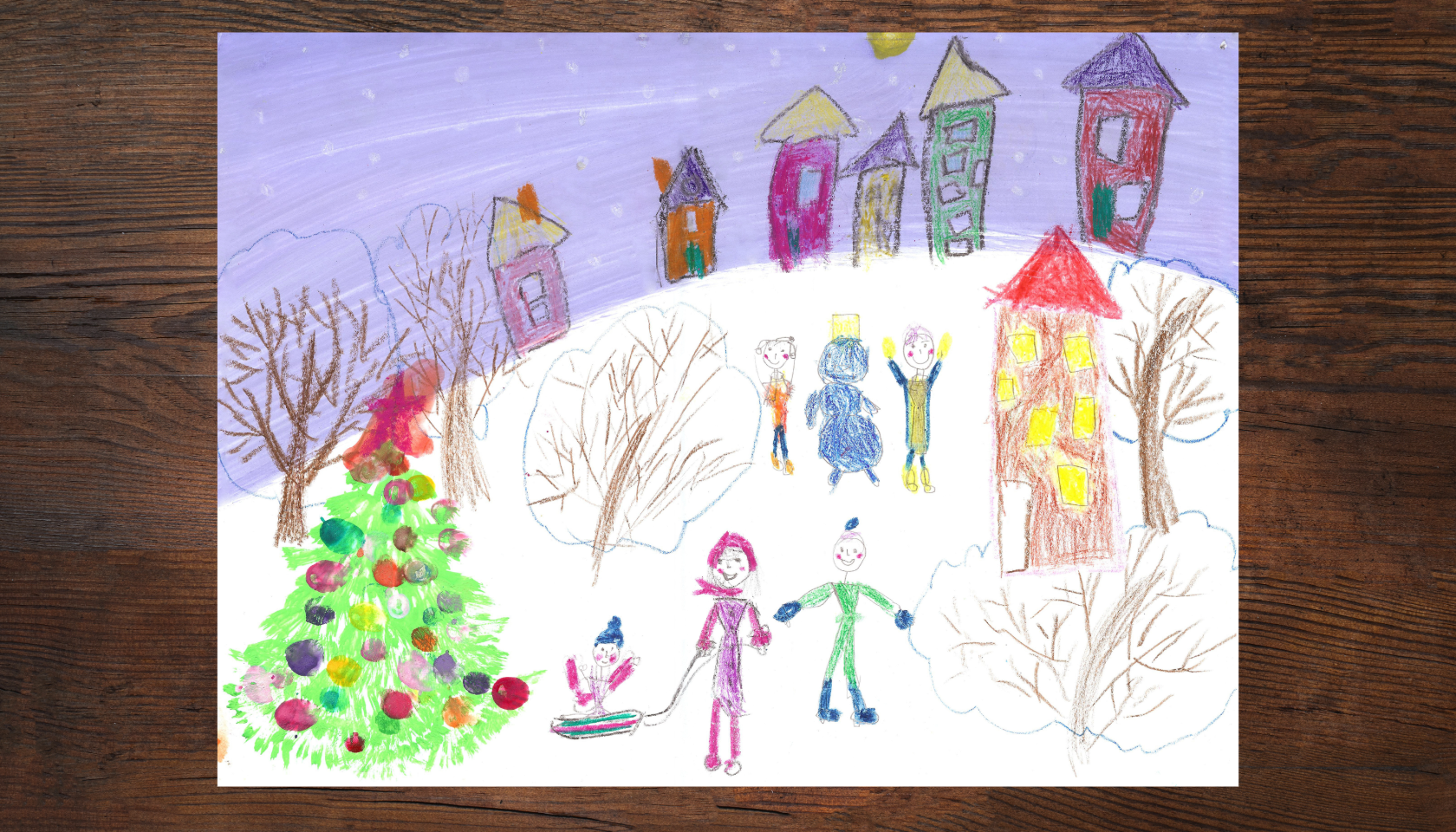
The holidays have a way of bringing memories to the surface, especially when we're missing someone we love. This holiday grief activity combines drawing and journaling to help you spend time with a cherished memory, explore the love and grief it holds, and create something meaningful you can keep or share.
My uncle Doug died by suicide in mid-October, just weeks before the holiday season began. I was only seven years old, and his absence changed what the holidays looked and felt like for our family. All these years later, his memory is still part of our holiday season, and our everyday lives, too. We remember his humor, the things he taught us, and the stories that keep him close.
Sometimes a memory comes to mind so clearly that we can almost hear someone's voice or see their expression. Other times, the little details are harder to reach. What were they wearing that day? What did their laugh sound like? What was that funny thing they always said?
That's one of the reasons I love this practice. Drawing gives us an opportunity to slow down and spend time with those details. It turns a memory into something we can see, hold, share, and return to.
You don't need to be an artist. Stick figures are welcome! All you need is paper, something to draw with, and a willingness to spend a little time with a memory that matters to you.
You can do this on your own or invite children, family members, or friends to join you. And when you're finished, you'll have something tangible that honors your connection with the person you love and miss.
Why Drawing Can Be Helpful When You're Grieving
Much of our experience of grief happens inside us. Memories, feelings, sensations, and thoughts can be difficult to explain, even to the people who know us best.
Drawing gives us a way to bring some of that experience into the world.
In expressive arts, this is sometimes called externalizing. Rather than holding a memory entirely in your mind, you're giving it shape and making it something you can see, touch, and return to.
There is something valuable about making a memory more concrete. As you draw, you may remember details you haven't thought about in years. Maybe it's the way someone held their coffee cup, the color of the kitchen curtains, or where everyone was sitting around the table. One detail may bring another to mind.
Drawing can also slow us down. Instead of moving quickly from one thought to the next, we spend time noticing what we remember, choosing what to include, and paying attention to what happens as the picture takes shape.
And unlike a memory that comes and goes, a drawing becomes something tangible. You can tuck it into your journal, share it with someone who knew your loved one, or take it out next year and remember the experience of creating it.
There's some encouraging research behind creative approaches to grief support. A 2018 systematic review of 27 studies found that visual art approaches showed promise for helping bereaved people explore their continuing connection with someone who died and make meaning after a loss. The evidence was less consistent when it came to reducing grief-related distress.
That's an important distinction. We're not drawing to get rid of grief or turn a painful memory into a happy one. We're giving ourselves another way to connect with our memories and explore what they mean to us.
And the drawing doesn't have to look good. The value is in the experience of creating it, not the quality of the finished picture.
A Mindful Drawing Activity to Remember a Loved One During the Holidays
Set aside about 20 to 30 minutes, although you're welcome to take longer. You'll need paper, something to draw with, and a journal or notebook for reflection.
You can do this on your own, with someone you trust, or as a family activity. If drawing isn't appealing, you're welcome to use words, colors, or simple symbols instead.
1. Take a few moments to settle in
Find a comfortable place to sit and notice how you're feeling. You might feel your feet on the floor, notice the support of the chair beneath you, or pay attention to a few natural breaths.
Look around the room and notice what's familiar. You don't have to feel calm or relaxed before you begin. The intention is simply to become aware of your experience and give yourself a little space before turning toward a memory.
2. Choose a memory you cherish
Think of someone you love who has died and allow a memory to come to mind.
It might be a holiday gathering, but it could just as easily be an ordinary afternoon in the kitchen, a conversation in the car, a walk you took together, or a moment when you felt especially connected.
Choose a memory you feel comfortable spending time with today. If something feels overwhelming, you can choose another memory, return your attention to your surroundings, or stop the practice.
As you remember, see what details come back to you. What was happening? Who was there? What made this particular moment meaningful?
You don't need to remember everything. Begin with what you have.
3. Draw the memory as you remember it
Now begin drawing the scene. Try to include as many details as you can remember, without worrying about whether your picture looks realistic.
What was your loved one wearing? Were they holding a favorite mug or sitting in a particular chair? What did the room look like? Was there something on the table or hanging on the wall?
You might remember the smell of something cooking, the sound of their laughter, or an expression on their face. Even though you can't draw a sound or smell directly, you can include words, colors, or symbols that help you remember.
As you draw, you may find that one detail leads to another. Perhaps remembering the kitchen table brings back a conversation you had there, or drawing someone's smile reminds you of something they used to say.
You might also discover that certain details are difficult to remember. That's okay. Memories aren't photographs, and you don't need to fill in every blank.
Notice what it's like to bring this memory onto the page. You may feel warmth, sadness, anger, gratitude, or something you can't quite name. There's no need to analyze every feeling or make it go away.
If you find yourself becoming overwhelmed, you can take a break, look around the room, or choose to stop. You can always return to the drawing another day.
And when you're finished, you have something that didn't exist before. It doesn't need to be a perfect representation of the moment to hold meaning for you.
4. Explore the love and the grief
When you've finished drawing, take out your journal and draw a line down the middle of a page.
Write Love at the top of one column and Grief at the top of the other.
Look at your drawing and think about the memory you chose.
Under Love, write about what you cherish. This might include something your loved one said, how you felt when you were together, a quality you admired, or an experience you shared.
Under Grief, write about what you miss. Maybe it's their voice, their sense of humor, the way they made the holidays feel special, or the future you expected to have together.
As you write, you may discover that some things belong in both columns.
The holiday dinner you loved preparing together may also be the tradition you dread doing alone. A favorite song might bring back a wonderful memory and remind you how much you wish you could hear it together again.
You don't need to decide which column is the right one. Sometimes love and grief are so closely connected that we can't separate them.
This reflection gives both a place on the page.
5. Consider what you want to carry forward this holiday season
Now take a look at your drawing and what you've written. As you think about the upcoming holidays, what stands out to you?
Perhaps there's a tradition you want to continue because it helps you feel connected. Maybe you've been maintaining a tradition out of obligation, and this year you'd like to do something different.
You might want to prepare a favorite recipe, share a story, display a photograph, or invite someone else to participate in something you once enjoyed together.
You can also create something entirely new. Remembering someone doesn't have to mean repeating what you did in the past. Your relationship with the person who died can continue to influence the choices you make today.
Take a few minutes to reflect on these questions:
- What do I want to carry forward from this relationship into the holidays?
- Is there anything I want to leave behind or do differently this year?
- What would I like to create that honors both my loved one and the life I'm living now?
You might circle a few words from your Love and Grief columns or write down an idea you want to revisit.
You don't have to make all your holiday decisions today. This is simply a chance to begin considering what matters to you before other people's expectations and the busyness of the season take over.
If you're navigating difficult decisions about family gatherings or traditions, my free Holiday Help planner offers space to think through what you'd like to keep, change, or let go of this year.
How to Share Your Drawing With Others
One of the things I appreciate about this activity is that the drawing can become a starting point for sharing a story.
Sometimes it's difficult to explain why a particular memory matters. But when you have a picture in front of you, you can point to a detail and say, "This was the chair he always sat in," or "She made this every Christmas, and I can still remember the smell."
The drawing gives other people something to look at while they listen. They may ask questions, share their own memories, or remember details you'd forgotten.
You can also keep the drawing private. Not every memory needs an audience.
You might tuck it into your journal, put it in a memory box, or bring it out during another holiday season. Over time, the drawing may become a reminder not only of the person you love, but also of your own experience of remembering them.
You could even draw the same memory again next year. Different details might stand out. Your feelings about the memory may have shifted, or you may find yourself connecting with it in a familiar way.
The memory doesn't have to change for your relationship with it to keep evolving.
How to Adapt This Grief Activity for Children and Families
Drawing can be especially useful for children because they don't always have the words to explain what they're thinking or feeling.
You can invite a child to draw something they remember about the person who died. It might be a favorite activity, a holiday celebration, or something funny that happened.
You might ask, "What do you remember about being together?" or "What's something you loved doing with them?"
Let the child decide what to draw and whether they want to talk about it.
For younger children, you can simplify the Love and Grief reflection by asking what they loved about the person and what they miss. Older children and teenagers may enjoy writing alongside their drawings, although some will prefer to keep their work private.
Adults can participate alongside children by making their own drawings. This creates opportunities to share family stories that younger people might not know.
Perhaps a child draws a memory of baking cookies with Grandma, and someone else remembers that Grandma always burned the first batch. Suddenly, you're sharing something about the person that might not have come up otherwise.
It's important to make participation optional. Some children may be excited to remember someone, while others may prefer to play or do something unrelated to grief. Children also tend to move in and out of grief, so don't be surprised if a child shares something meaningful and then immediately wants to do something else.
You can revisit the activity another day if they express interest.
For more ideas, see my tips for supporting grieving children during the holidays.
Other Ways to Remember Someone During the Holidays
Drawing is one way to connect with your memories, but there are many others.
What matters is finding something that feels meaningful to you and respects the relationship you shared.
You might cook or bake something they loved, invite family members to share their favorite stories, display a photograph, or use an ornament that belonged to them.
Maybe you'd like to write them a letter about what's happening in your life. Or perhaps there's a place you used to visit together, and you'd like to go there again.
If you're gathering with family at Thanksgiving, I've shared 15 ways to honor a loved one on Thanksgiving that may give you a few ideas.
You don't need to do everything, and you certainly don't need to turn remembering someone into another holiday obligation.
One meaningful activity may be enough.
Caring for Yourself After the Activity
Spending time with a meaningful memory can bring up feelings that stay with you after the drawing is finished.
You may feel comforted, sad, tired, or surprised by something you remembered.
Give yourself a little time to notice what you need before moving on to the next thing.
You might take a walk, make a cup of tea, write a little more in your journal, or call someone who knew your loved one.
You may want to put your drawing somewhere you can see it, or you might prefer to tuck it away for now. Both are fine.
The drawing is yours. You get to decide what happens to it.
Continuing Bonds and the Mindfulness & Grief System
This drawing practice is an example of Continuing Bonds, Step 6 of my 8-Step Mindfulness & Grief System.
Continuing bonds is the understanding that death changes our relationship with someone we love, but it doesn't necessarily end that relationship.
We continue to carry people with us through our memories, the things they taught us, the traditions we shared, and the ways they influenced who we are.
The drawing gives us a tangible way to explore that connection.
I created the Mindfulness & Grief System to help people work with grief through mindfulness, self-compassion, and practical exercises that can be used in everyday life.
The goal isn't to stop missing someone. It's to learn how to care for ourselves through grief while making room for the relationships, memories, and experiences that continue to matter.
You Don't Have to Navigate Holiday Grief Alone
This drawing practice is one of the activities we're exploring together in the live classes at The Mindfulness & Grief School, my online grief support community.
Throughout the holiday season, we'll be working with challenges that tend to come up this time of year, including changing traditions, difficult family relationships, setting boundaries, and finding ways to remember the people we love.
Our weekly gatherings include grief support, mindfulness meditation, journaling, and practical exercises you can use in your own life.
One of my favorite parts of sharing activities like this in a group is getting to hear the stories behind people's memories. We learn about the people who shaped one another's lives, and we make room for both the love and the grief that remain.
You can try The Mindfulness & Grief School free for 14 days and join us for the live classes. You're welcome to participate in the conversation, share your experiences, or simply listen while you get comfortable.
You can also explore my Holiday Grief Resource Center for additional articles, exercises, and support throughout the season. If Thanksgiving is particularly difficult, my article on missing loved ones on Thanksgiving may be helpful.
As you prepare for the holidays, I hope this practice gives you a meaningful way to spend time with someone you love and miss.
And perhaps you'll come away with something you didn't expect: a forgotten detail, a story you want to share, or a drawing you can hold in your hands and return to whenever you wish.
Frequently Asked Questions About Holiday Remembrance Activities
What if I'm not good at drawing?
You don't need artistic skill to benefit from this practice. Stick figures, simple shapes, and words are all welcome.
The drawing is a way to explore a memory, not a test of your artistic ability.
You can even create a simple map of the scene, showing where people were sitting or standing, or use colors and symbols to represent details that matter to you.
What if drawing the memory makes me cry?
A meaningful memory can bring up love, happiness, sadness, anger, or several feelings at once.
If you cry, you can allow yourself to cry if that feels manageable. You can also put the drawing down, get a drink of water, look around the room, or return to the practice another day.
There's no requirement to finish.
What if I can't remember the details?
Start with what you do remember.
Maybe you remember the kitchen but not what everyone was wearing. Perhaps you remember how you felt when you were together, even if the physical details are unclear.
You can use words or symbols to represent those parts of the memory.
There's no need to invent details or worry about getting everything right. Memory is imperfect, and this practice isn't about creating an accurate historical record.
What if I have complicated memories of the person who died?
Relationships are complicated, and not everyone has happy memories of the person they're grieving.
You may remember moments of love alongside disappointment, conflict, or things you wish had been different.
You don't have to pretend the relationship was perfect. You can choose a memory that feels manageable or explore the experience of the relationship as it was.
You can also decide that this particular exercise isn't right for you today.
How can I use this activity with someone who doesn't want to talk about grief?
You can invite them to participate, but allow them to decide.
Some people find drawing easier than talking. Others may prefer to listen while you share a memory or simply look at what you've created.
You don't have to turn the activity into a conversation about feelings. Sharing a funny story or remembering a favorite meal can be meaningful, too.
If your family has different needs around remembering someone, you can still use this practice privately or with someone who welcomes the conversation.
Is it okay to change holiday traditions after someone dies?
Yes. Traditions can help us feel connected, but they can also become difficult when the people who made them meaningful are no longer here.
You may want to continue some traditions, change others, or take a break from certain celebrations.
Changing a tradition doesn't mean you're forgetting someone.
If you're struggling with invitations, family expectations, or the pressure to participate, my article about setting boundaries around holiday events offers some practical guidance.