
Free printable holiday grief resource
Free Grief During the Holidays Worksheet & Planner
Make a plan for the holiday season that includes your grief, your limits, your support, and the person you love.
Free printable planner. The button takes you to the short sign-up form below.
The Grief-Sensitive Holiday Planner is a free printable worksheet for coping with grief during the holidays.
Use it to think through difficult gatherings, plan ahead for boundaries and traditions, decide who you can lean on, and make room for remembering the person you love.
- Coping tools for hard moments
- People you can reach out to
- Invitations and boundaries
- Traditions you can change
- Ways to remember your loved one
- What you need this season
Your Free Printable Planner
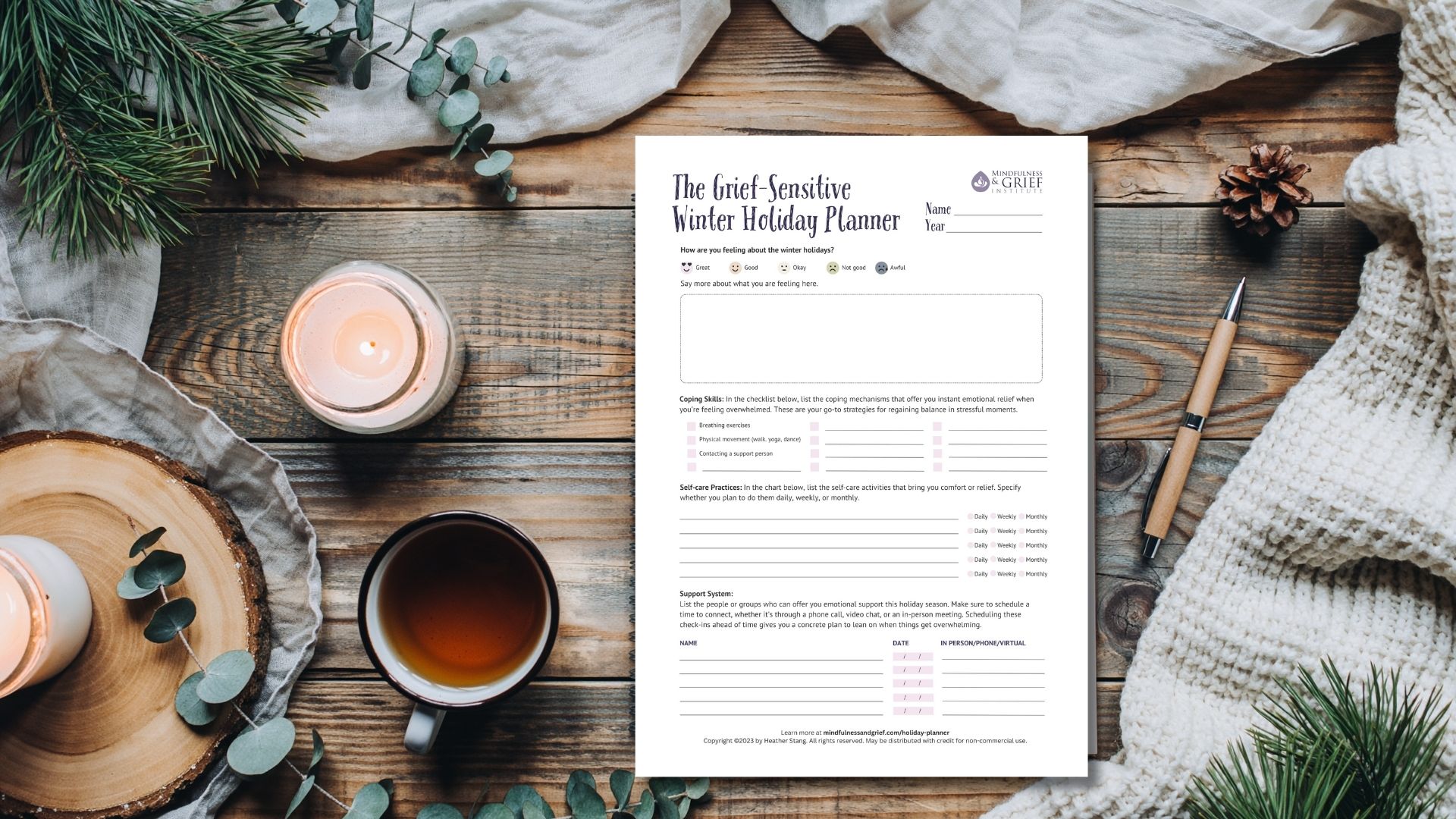
Practical pages for coping, support, holiday plans, traditions, and remembrance.
Inside the Free Worksheet
Plan for the Parts of the Holidays That May Feel Hardest
The Grief-Sensitive Holiday Planner gives you a place to think through real decisions before you are in the middle of them.
After you download the planner, I’ll also send a few short emails to help you work through these sections, with an additional resource for each one.
Coping With Hard Moments
Choose a few things you can turn to when feelings of grief become overwhelming or catch you off guard.
Invitations & Boundaries
Think through gatherings, family plans, and what you want to say yes, no, or maybe to this holiday season.
People You Can Lean On
Identify who you can call, text, spend time with, or ask for practical help when you need support.
Traditions & Remembrance
Decide what you want to keep, change, or skip, and how you might remember the person you love.
A Closer Look
A Holiday Grief Worksheet You Can Actually Use
You do not need to complete everything at once.
Start with the part that feels most useful today. That may be thinking through an invitation, writing down who you can call, choosing a coping tool, or deciding how you want to remember your loved one.
Come back to the planner as the holiday season changes. What feels manageable before Thanksgiving may feel different by Christmas or New Year’s.
How to Use It
Start Where You Need It Most
There is no right or wrong way to use the worksheet. You can complete the whole planner or work with one question at a time.
Print or Open It
Keep the planner somewhere you can come back to during the holiday season.
Choose a Section
Start with the part that feels most relevant right now.
Name What Is Hard
Write down the gathering, tradition, feeling, or decision that is taking up space.
Choose What May Help
Identify one coping tool, boundary, person, or choice you can turn to.
Come Back Later
Your needs may change. The planner can change with them.

A Note From Heather
This Work Is Personal for Me
I was seven years old when my uncle died by suicide in October 1977.
My family survived, but we did not get the support we needed. There were things left unspoken, tension no one quite knew what to do with, and false smiles that became especially noticeable during the holidays.
Years later, when I began working on a suicide hotline and studying thanatology, I started to understand what that little girl, her parents, and her grandparents had been carrying.
That is part of why I created this planner: to give you a place to name what is hard, think ahead about support and boundaries, and make room for the person you love without pretending everything is fine.
You do not have to know exactly what you need before you begin. Sometimes it helps simply to have a place to start.
With lovingkindness,
Heather
Holiday Grief Questions
Grief During the Holidays: Questions, Support & Resources
Grief can affect family plans, traditions, relationships, and the parts of the holiday season you once enjoyed. These answers can help you think through what may help, with links to more detailed holiday grief resources when you want them.
Start with the parts of the holiday season that feel hardest right now. You might plan a few coping tools for difficult moments, decide who you can reach out to, simplify an obligation, or give yourself more choice around gatherings and traditions.
Coping with grief does not mean trying to make your feelings disappear. It means having a few practical options available when grief shows up.
Read more: Coping With Grief During the Holidays
The holiday season can bring more reminders of the person who died. Music, food, decorations, family gatherings, annual traditions, and familiar places can all make their absence more noticeable.
There can also be pressure to feel festive or take part in the holiday spirit when that does not match what you are feeling. That difference can make grief feel especially present at this time of year.
The first holiday after the death of someone loved can bring a lot of uncertainty. You may not know how a tradition, gathering, or holiday meal will feel until you are there.
Plan ahead where you can, but leave yourself room to change your mind. Decide who you can call, how long you want to stay at events, and what you might do if the day becomes more painful than expected.
You can keep a tradition, change it, skip it this year, or create something new. The same is true for social events. An invitation does not have to mean an automatic yes.
Think about which parts of the holidays still feel meaningful and which ones feel like more than you want to carry.
Read more: Redefining Traditions and Rituals After Loss
Give yourself more than two choices. You can say yes, no, maybe, decide closer to the day, arrive late, leave early, or change your mind.
A simple response is often enough. You do not need to give a long explanation every time you protect your energy or make a different choice.
Read more: How to Say No to Holiday Events When You’re Grieving
Start with what you know about your own needs, then communicate the change as clearly and simply as you can.
You might explain that you want to spend less time at a gathering, skip a tradition this year, change who hosts the holiday meal, or do something different to remember the person who died.
Read more: 5 Steps to Communicate Your Needs During the Holidays
Think ahead about situations that may be difficult and decide what you want available to you. That might include a person you can sit with, a quiet place to take a break, your own transportation, or a sentence you can use when a conversation becomes too much.
One practical tip is to decide on an exit phrase before you need it.
Read more: Holiday Grief Triggers at Parties
Decorations can carry a lot of memory. You may want to decorate exactly as you always have, change a few things, put out one meaningful item, or skip decorating this year.
Notice what feels comforting and what feels like too much, then give yourself permission to choose accordingly.
A holiday meal can make the absence of a family member feel very visible. The empty chair, a favorite recipe, or a familiar place at the table may bring up sadness, memories, or even laughter.
You might change where people sit, make the person's favorite dish, share a memory, or choose not to do anything differently at all.
You might light a candle, make a favorite recipe, share a story, play their music, write them a letter, visit a meaningful place, or create a memory box.
Remembrance does not have to be formal or public. A small private act can be just as meaningful.
Thanksgiving can bring together family expectations, traditions, food, travel, and the absence of someone who used to be part of the day.
Think ahead about what you want the day to look like. You may want to shorten the gathering, change a tradition, ask someone to check in with you, or plan time alone before or after the meal.
Support can include family and friends, a grief support group, a therapist or counselor, a spiritual community, or someone who knows how to listen without trying to fix what you are feeling.
Different people may be helpful for different things.
A therapist, grief counselor, or other qualified professional may help if you want more support working with grief and loss, family strain, sleep, difficult memories, or feelings that are affecting daily life.
The worksheet can help you reflect and plan, but it is not a replacement for therapy or professional care when you need more support.
Ask what would actually be helpful rather than assuming. Some people want to talk about their loved one. Others may appreciate practical help, company, an invitation with no pressure attached, or permission to change their mind.
Listen without rushing to offer advice. Laughter and sadness can exist in the same day, and there is no right or wrong way someone should participate in the holiday season.
It can be. A holiday that felt manageable one year may feel much harder the next, and something that was painful before may feel different with time.
Grief changes as life changes. You can revisit your plan each season instead of assuming last year's choices still fit.
I’ll send you the Grief-Sensitive Holiday Planner first.
Over the next few emails, I’ll help you work through coping with hard moments, finding support, handling invitations and boundaries, and remembering the person you love. Each email also includes an additional holiday grief resource you can use if it feels helpful.
Free Grief-Sensitive Holiday Planner
Get Your Free Holiday Grief Worksheet
Enter your first name and email and I’ll send you the printable planner, followed by a few short emails to help you work through it.
You’ll confirm your email before accessing the planner.